RegulationSILVER SPRING, Md. · Event November 9, 2026
FDA adds NAION eye-risk warning to all GLP-1 labels
NAION can cause sudden, painless vision loss in one eye. FDA is not telling patients to stop these drugs. It said to contact a clinician right away if sudden vision changes occur.
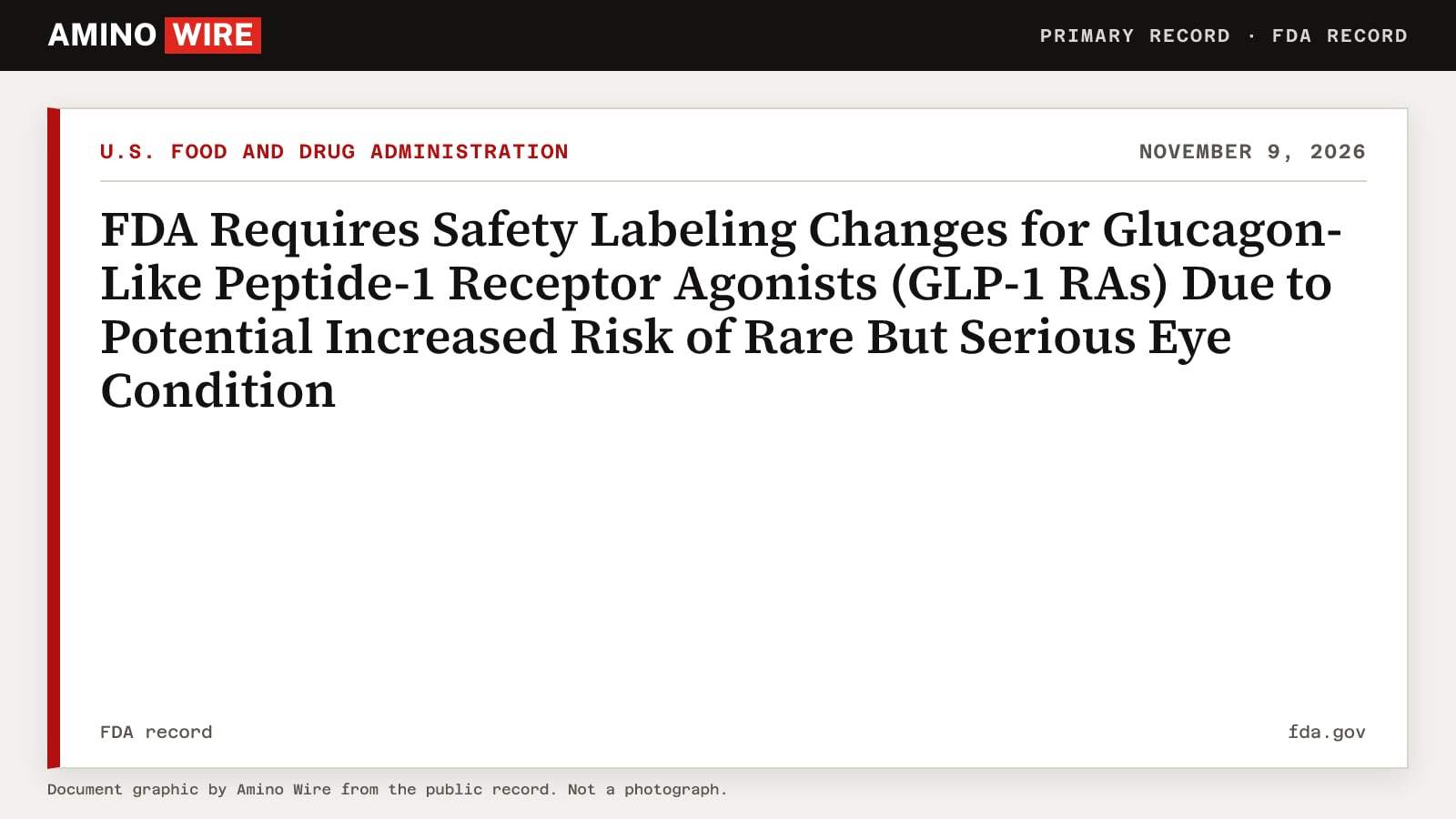
The U.S. Food and Drug Administration said on November 9, 2026 that it is requiring a new warning on every approved glucagon-like peptide-1 receptor agonist, the class that includes Ozempic, Wegovy, Mounjaro and Zepbound. Application holders must add a potential increased risk of non-arteritic anterior ischemic optic neuropathy, or NAION, a rare condition that can cause sudden, painless vision loss in one eye, to the Warnings and Precautions section of the label.
FDA is not telling patients to stop these medicines on their own. It said people should contact a health care professional right away if they have sudden vision changes.
What FDA found
FDA based the decision on a meta-analysis of 126 randomized, controlled trials across GLP-1 receptor agonist development programs, covering 134,253 people and 288,879 person-years of exposure. The agency identified 15 probable NAION events, 10 in people on a GLP-1 receptor agonist and 5 in people on placebo, and none in people on other non-GLP-1 glucose-lowering drugs.
The analysis found 6.4 NAION cases per 100,000 person-years in people treated with GLP-1 receptor agonists, compared with 3.8 per 100,000 person-years in people treated with placebo or a non-GLP-1 glucose-lowering medicine. Published estimates of the background rate in adults older than 50, FDA said, are 2.3 to 10.2 cases per 100,000 persons per year.
The agency also reviewed animal studies, postmarketing reports and observational studies, a point Reuters also reported. FDA said the animal data did not identify a mechanism that would explain an increased NAION risk. A separate FDA analysis in its Sentinel real-world data network, among adults with type 2 diabetes who started a GLP-1 receptor agonist or another common diabetes drug between 2019 and 2024, did not find a statistically significant increase compared with SGLT-2 inhibitors, but did find a higher rate compared with DPP-4 inhibitors.
FDA concluded that there is a “potential increased risk of rare NAION events in patients taking GLP-1 RAs,” and that NAION cases have been reported for all currently marketed products in the class.
Which drugs are covered
The requirement applies to all GLP-1 receptor agonist medicines, FDA said. The agency’s table of approved products includes:
- Byetta (exenatide). FDA notes that the Byetta application was voluntarily withdrawn in 2025 because the brand was no longer marketed, and that only generic exenatide products are sold now.
- Victoza and Saxenda (liraglutide), and Xultophy (liraglutide plus insulin degludec)
- Trulicity (dulaglutide)
- Soliqua (lixisenatide plus insulin glargine)
- Ozempic, Rybelsus and Wegovy (semaglutide)
- Mounjaro and Zepbound (tirzepatide), which FDA notes is a dual GIP and GLP-1 receptor agonist
- Foundayo (orforglipron)
What FDA tells patients and clinicians
FDA said NAION can cause “acute, painless, decreased vision in one eye, including permanent vision loss.” Symptoms can include sudden vision loss in one eye that a person may notice on waking, blind spots or tunnel vision, distorted colors, and reduced central sharpness. Patients should “contact their health care professional right away if they have any of these symptoms.”
People who have already had NAION, FDA said, should talk with their clinician about whether to continue or stop the drug. The agency also said that if NAION has occurred in one eye, “there is an increased risk that it will occur in the other eye,” and that patients with a history of NAION are at increased risk of recurrence.
Clinicians should “promptly refer” a suspected case to an ophthalmologist. FDA said they should “consider discontinuing the GLP-1 RA in patients who develop NAION, unless the benefits of treatment clearly outweigh the risk.”
Earlier European review
According to Reuters, the European Medicines Agency’s safety committee concluded in 2025 that NAION may occur in as many as 1 in 10,000 people who take semaglutide (the ingredient in Wegovy, Ozempic and Rybelsus) for a year or more. Reuters called this the first time a regulator had confirmed the side effect. Those details are from Reuters, not from FDA’s November 9 communication.
What is not known
- How large the added risk is in everyday use. FDA’s trial analysis is based on a small number of events. Its Sentinel study did not show a statistically significant increase versus one common diabetes drug class and did show an increase versus another. The agency describes the risk as potential and the condition as rare.
- A biological explanation. FDA said available animal data did not identify a mechanism.
- Timing of label updates. FDA said it is requiring the change. The safety communication does not say when revised labels will appear on pharmacy shelves.
- What companies will do next. Reuters said Eli Lilly and Novo Nordisk did not immediately respond to requests for comment.
This story summarizes a regulator’s safety communication. It is not medical advice.
What changed: key dates
Frequently asked questions
Should patients stop taking these drugs?
FDA did not tell patients to stop on their own. It said people who have already had NAION should talk with their clinician about whether to continue or stop, and that clinicians should consider discontinuing the drug if NAION develops unless the benefits of treatment clearly outweigh the risk.
What is NAION?
FDA describes non-arteritic anterior ischemic optic neuropathy as a rare condition that can cause sudden, painless decreased vision in one eye, including permanent vision loss. It is caused by decreased blood flow to the front of the optic nerve.
Which drugs are covered?
FDA is requiring the change for all GLP-1 receptor agonist medicines. Its table lists exenatide, liraglutide, dulaglutide, lixisenatide (in Soliqua, with insulin glargine), semaglutide, tirzepatide and orforglipron, sold under brand names including Victoza, Saxenda, Trulicity, Xultophy, Ozempic, Rybelsus, Wegovy, Mounjaro, Zepbound and Foundayo.
Sources
4 linked records- [1] FDA Requires Safety Labeling Changes for Glucagon-Like Peptide-1 Receptor Agonists (GLP-1 RAs) Due to Potential Increased Risk of Rare But Serious Eye Condition
FDA Drug Safety Communication – November 9, 2026
U.S. Food and Drug Administration · Primary record
Image: U.S. Food and Drug Administration (og:image from fda.gov)
- [2] US FDA orders new eye risk warnings for Ozempic, Zepbound
Reuters, via KRRO ·
- [3]
- [4]
Amino Wire reports regulatory and court records. Nothing here is medical or legal advice, and we do not provide dosing information. Named companies may respond; see right of reply.